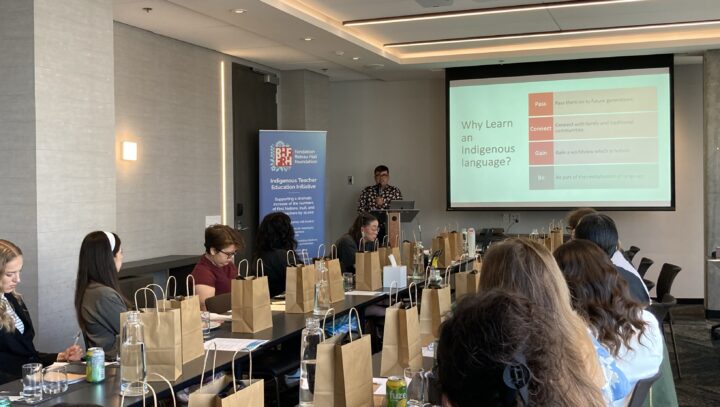
This November, the World Indigenous Peoples’ Conference on Education (WIPCE) brought together more than 3,800 delegates in Tāmaki Makaurau, Auckland. Indigenous educators, leaders, students, and community builders gathered to exchange ideas on language revitalization, teacher training, and community-led learning.
For the Rideau Hall Foundation (RHF), WIPCE was a chance to deepen understanding and strengthen connections within the Indigenous Teacher Education (ITE) ecosystem. RHF staff members Bill Mintram and Randa Abader joined many of the RHF ITE grantees, several of whom presented or facilitated panels and workshops.
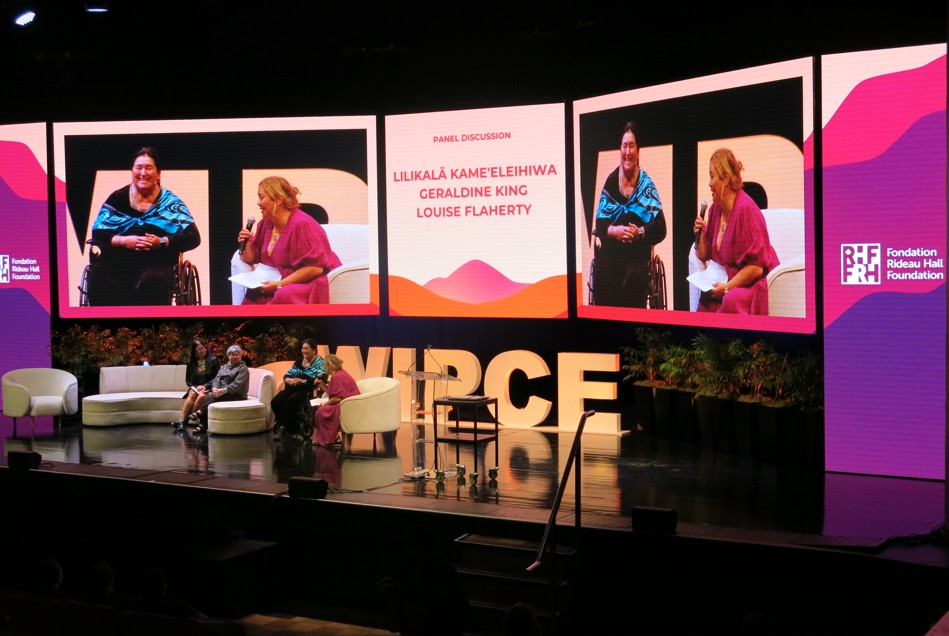
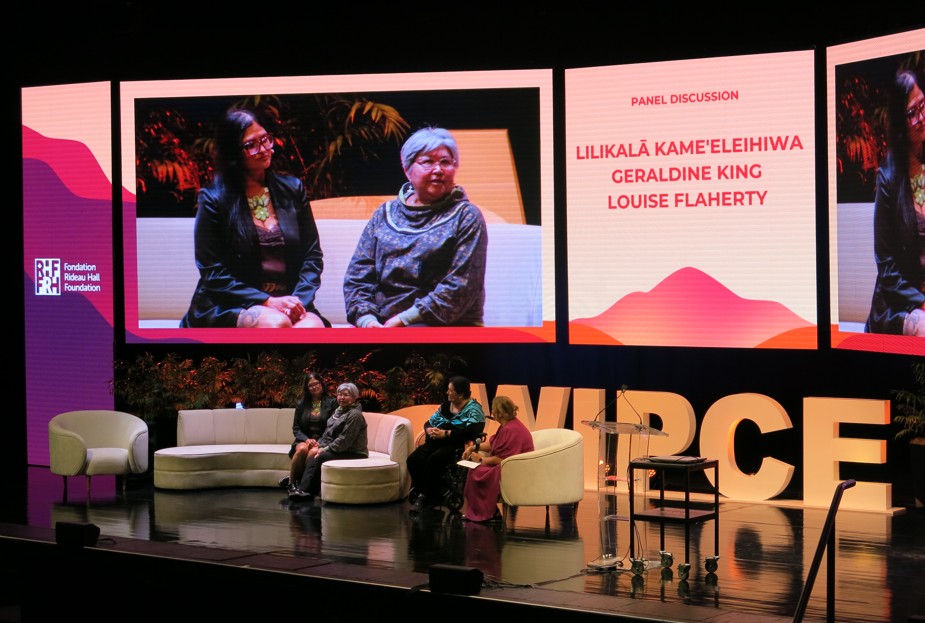
One highlight of WIPCE was RHF’s sponsorship of the Linguistic and Cultural Revitalization Panel on the main stage, which featured two RHF ITE grantee leaders: Louise Flaherty, an Inuk language champion and co-founder of Inhabit Education and Geraldine King, an Anishinaabe land-based education researcher and co-director of the Office of First Nations and Inuit Education at McGill University, alongside Hawaiian scholar Lilikalā Kameʻeleihiwa and Māori co-chairs Dr. Valance Smith and Dr. Rihi Te Nana.
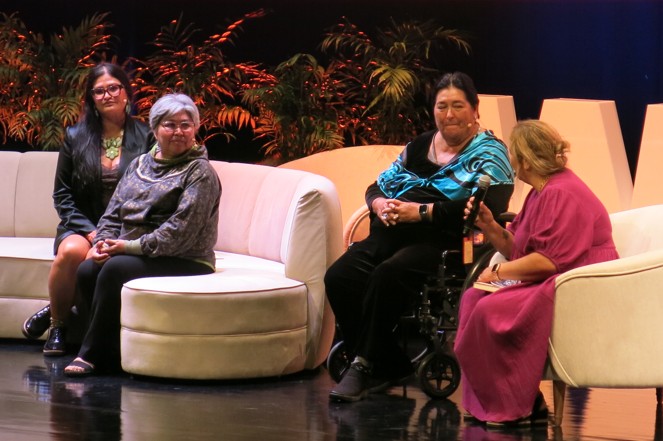
Below are three key takeaways that will guide our work in the months ahead.
1. Community-led Indigenous education is gaining global momentum
Throughout the week, it was clear that communities around the world are advancing their own models of learning grounded in language, identity, and local knowledge. From Inuit early-learning approaches to Māori language nests and Hawaiian immersion-based systems, presenters showed that Indigenous-led teacher education is not only possible, it is thriving.
For RHF, seeing Canadian leaders in conversation with global counterparts highlighted how closely aligned these efforts are. The scale and visibility of this work internationally reinforced the importance of keeping Indigenous perspectives and leadership at the centre of our own granting and partnerships.
2. The Canadian Indigenous education ecosystem is strong and growing
With nearly a thousand Canadian delegates at WIPCE, representation from Indigenous Teacher Education programs, universities, community organizations, and education leaders was especially strong. Many organizations and people we are collaborating with and supporting as a foundation were key to this gathering’s success and reflected as many of the speakers, leaders, moderators, and facilitators.
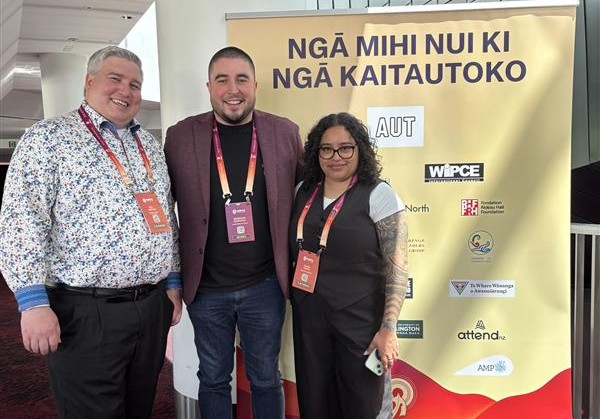
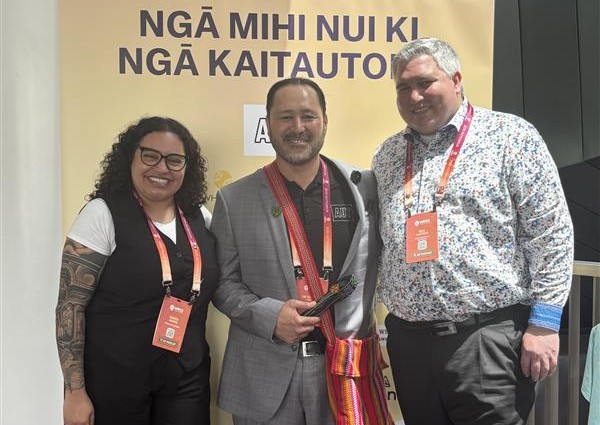
Our staff, Bill Mintram, Director of Indigenous and Northern Affairs, and Randa Abader, Manager, ITE Partnerships and Granting, were frequently approached by attendees who recognized our work and wanted to connect. This really shows the strength of the Canadian ecosystem and the trust built through years of relationship-building. Bill and Randa were also asked to share resources with teacher training programs in other countries after conversations about RHF funded research and grants, reflecting growing international interest in Canada’s flourishing ITE space.
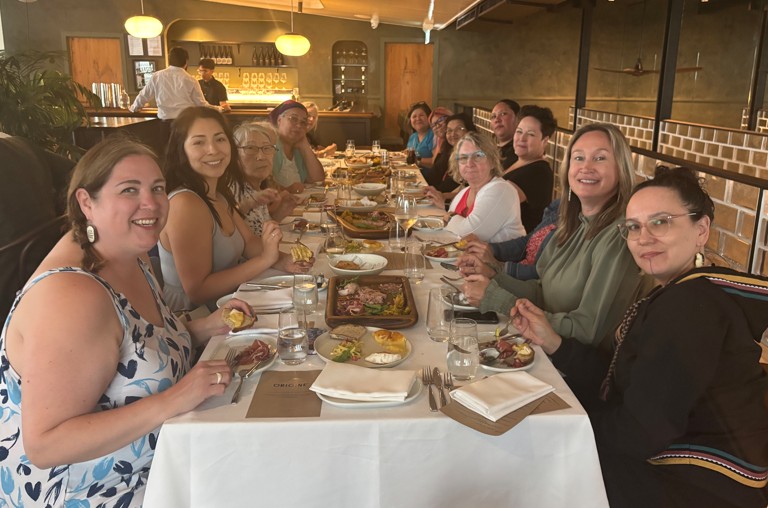
The RHF also hosted an evening gathering in Auckland with the ITE grantees, adjudicators, advisory committee members, and others in Canada’s ITE ecosystem, creating time and space to reconnect, share learnings, and build on relationships that will strengthen the ITE community in the years ahead.
3. Relationships are the foundation of systems change
While the formal program was rich, some of the most valuable moments happened through informal conversations in the WIPCE Village, between sessions, or over shared meals. Listening to how other communities are navigating language revitalization, teacher training, and community governance offered important insights for our own work.
These exchanges demonstrate that progress in Indigenous education is rooted in trust, long-term relationships, and prioritizing community-voices. Every connection made in Aotearoa strengthens the network of people working to support Indigenous teachers, students, and communities across Canada.
As RHF President and CEO Teresa Marques reflected:
“WIPCE brings together leaders who are shaping the future of education through identity, language, community, and care. It is a privilege to support and learn within this global circle.”
The relationships and knowledge carried home from WIPCE 2025 will help guide the next phase of RHF’s commitment to strengthening Indigenous Teacher Education and supporting community-led learning across Canada.