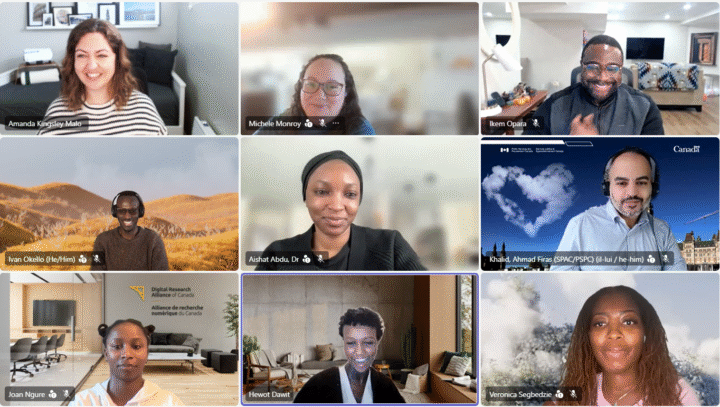
This month, the Queen Elizabeth Scholars (QES) program reached a milestone of 3,000 scholars, connecting people across disciplines, communities and countries through opportunities to learn, collaborate and contribute to positive change. Through its global alumni network, those connections continue well beyond the initial QES experience.
The Jeanne Sauvé–QES Mentorship Program, launched by the Rideau Hall Foundation (RHF) with support from the Jeanne Sauvé Foundation, builds on that experience by pairing QES alumni with experienced leaders for nine months of mentorship focused on career development, leadership and applied learning. Mentees can also propose projects to advance their professional goals, with selected projects eligible for up to $7,500 in funding.
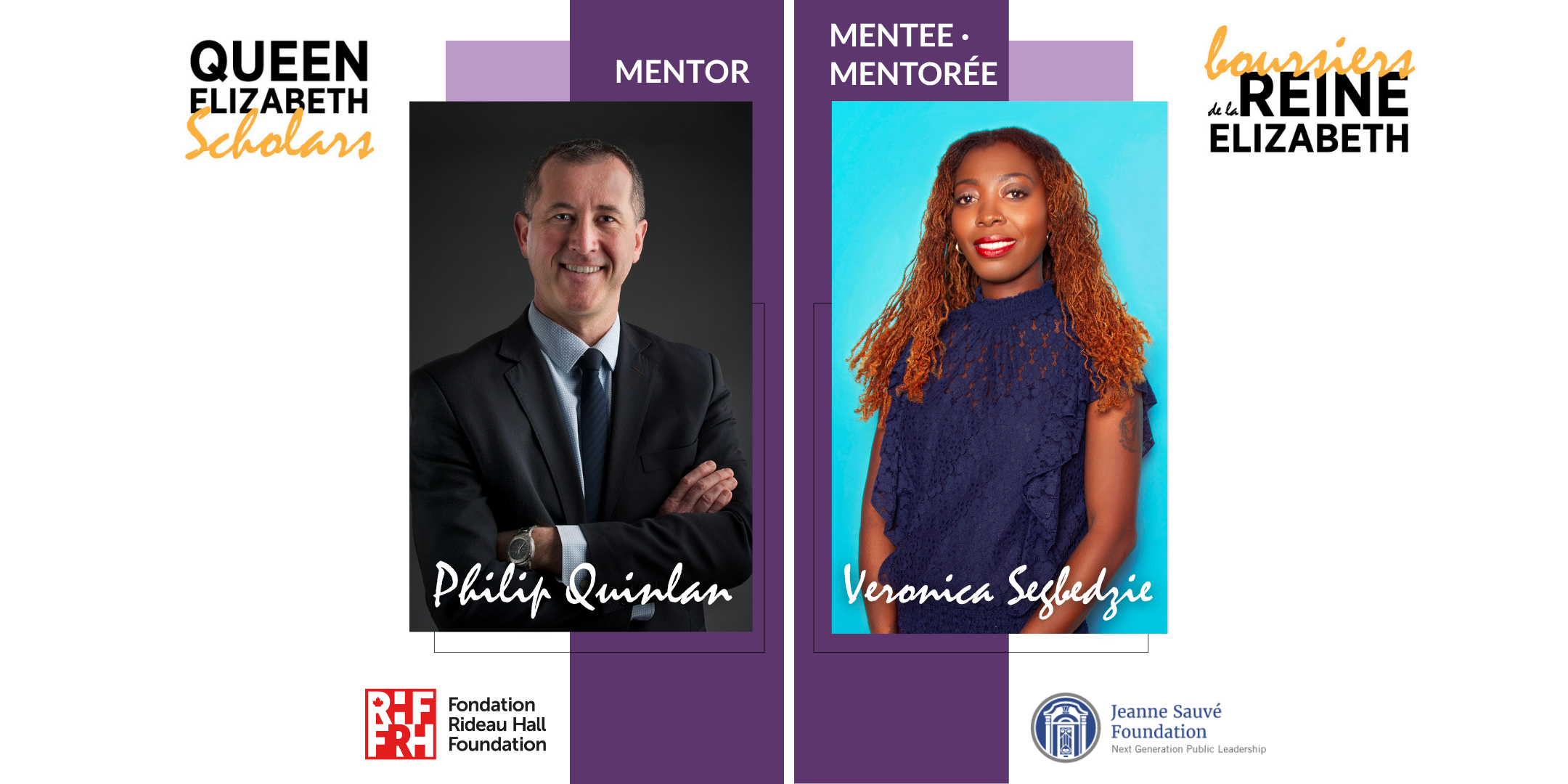
Veronica Segbedzie, an occupational health nurse practitioner with Health Canada and PhD candidate focused on maternal and child health, was part of the program’s first cohort. Paired with Philip Quinlan, Director General at the Canada Revenue Agency and a 2012 Governor General’s Canadian Leadership Conference alumnus, she found the experience changed how she thought about leadership – and her own potential to create change.
Leadership is something we practice – written by Veronica Segbedzie
When I began the Jeanne Sauvé–QES Mentorship Program, I expected to gain career guidance and expand my professional network. What I did not expect was a fundamental shift in how I understand leadership and my role in creating change.
As a nurse practitioner, researcher and emerging policy leader, I have always been motivated by a desire to improve health outcomes and influence policy. Before this experience, I often viewed leadership through the lens of formal positions and titles. Through my mentor’s guidance, I came to see leadership differently.
Leadership is not about holding a title. It is about stepping forward to leverage one’s knowledge, skills, judgment, networks, advocacy and passion to improve conditions for others.
A key part of that transformation came from the leaders my mentor introduced me to.
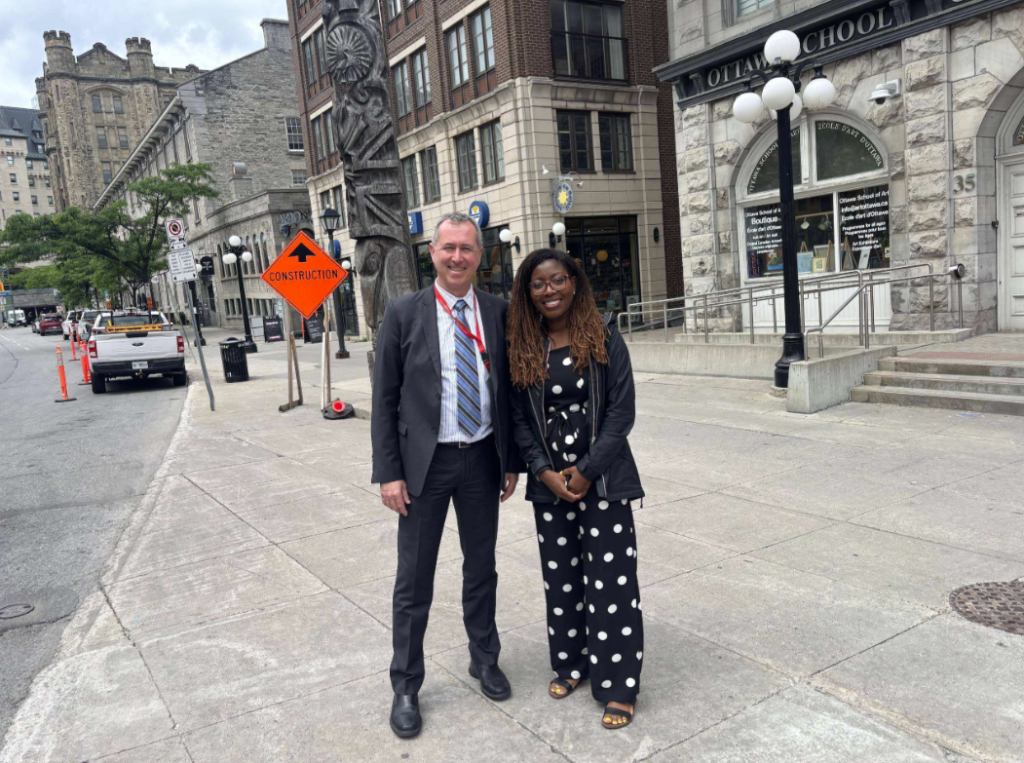
He connected me with professionals working in health, policy and the public sector whose careers reflected many of my own aspirations. I learned that meaningful influence often comes not from formal authority, but from building relationships, creating partnerships and advocating for change.
One insight emerged repeatedly throughout those discussions: the importance of bilingualism in Canada’s public sector. My mentor encouraged me to see French-language training not as an isolated educational goal, but as a strategic investment in my ability to serve Canadians more effectively.
Learning French at this stage of life has been both rewarding and humbling. It has tested my resilience, patience and willingness to be uncomfortable. While I continue to work on my speaking and writing skills, I have made meaningful progress and gained a greater appreciation for the barriers language can create and the importance of fostering inclusive, bilingual spaces.
The mentorship and language-learning experiences complemented each other in powerful ways. The mentorship helped me redefine leadership, while French-language training provided a practical way to act on that learning. Together, they deepened my understanding of equity, inclusion and public service.
Looking back, the most significant outcome of this journey is the realization that leadership is something that is practiced rather than possessed.
I am grateful to my mentor, the Rideau Hall Foundation and the Jeanne Sauvé–QES Mentorship Program for helping me expand my capacity as a leader and equipping me with new tools to contribute to a more inclusive Canada.